
It often starts with one headline. A storm, a war, a court case, a health scare, a political fight. One tap becomes ten minutes, then thirty. The body gets tense, the mind gets louder, and somehow the thumb keeps moving.
Doomscrolling is the habit of repeatedly consuming negative, upsetting, or alarming content online, often long after it stops being useful. It can happen on social media, news apps, video platforms, group chats, or comment threads. People do it during lunch, in bed, while waiting in line, and in the quiet moments when the brain is looking for something to hold onto.
The strange part is that doomscrolling rarely feels good. Many people know it makes them anxious. They know sleep suffers. They know the next post probably will not solve anything. Still, stopping can feel harder than expected.
That is where the psychology of doomscrolling matters. This habit is not just a lack of self-control. It is tied to threat detection, uncertainty, reward loops, social connection, and the design of digital platforms.
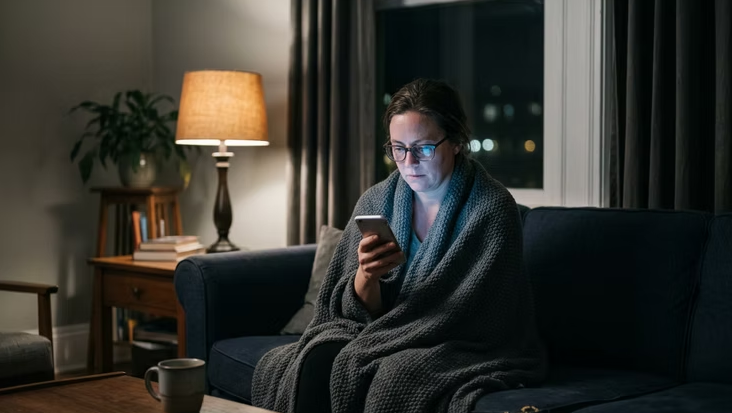
Doomscrolling often happens when the world feels uncertain and the mind wants answers.
Why doomscrolling pulls people in
Doomscrolling works because it taps into old survival systems with modern tools.
The human brain evolved to notice danger. A rustle in the grass mattered more than a pretty flower because missing a threat could be costly. Psychologists often call this the negativity bias, the tendency to give more attention and weight to negative information than positive information.
Online feeds take advantage of that bias, even when no one sets out to do harm. A shocking headline, a frightening video, or an angry comment can grab attention faster than neutral information. The brain treats it as important because it may signal a threat.
That helps explain the question many people quietly ask themselves: why do I doomscroll when it makes me feel worse? One answer is that the brain confuses more information with more safety.
When the news is uncertain, checking can feel like preparation. If something bad is happening, the mind wants to know:
How serious is it?
Is it getting closer?
What are other people saying?
Did anything change in the last five minutes?
Could this affect me or someone I care about?
Checking gives a brief sense of control. The trouble is that online information keeps changing. There is always a newer post, a sharper opinion, a worse possibility, or a comment thread that seems to reveal more. Relief fades quickly, so the brain asks for another check.
The role of variable rewards
Doomscrolling also has a reward loop built into it.
Most posts are forgettable. Then one post feels urgent, useful, funny, validating, or shocking. That unpredictability matters. Behavioral psychology has long shown that variable rewards can be especially habit-forming. Slot machines work this way. So do many feeds.
The next swipe might bring:
An update that feels important
A post that confirms a fear
A take that makes sense of chaos
A comment that sparks anger
A video that feels impossible to ignore
The reward is not always pleasure. Sometimes it is certainty. Sometimes it is outrage. Sometimes it is the feeling of being “in the know.”
That mix keeps the thumb moving.
Social belonging keeps the loop alive
Doomscrolling is not always private panic. It can also feel social.
During major events, people often check feeds because everyone else seems to be doing it. Online spaces become a shared nervous system. People react together, speculate together, grieve together, mock together, and worry together.
That can offer comfort. Social connection matters, especially during crises. But it can also intensify fear. Emotional content spreads quickly because emotion is contagious. Anger invites anger. Panic invites panic. Sarcasm can make helplessness feel clever for a moment, then leave the nervous system just as activated.
This is one reason social media and mental health are so closely linked in public conversation. The same platforms can connect people, inform them, and overload them, sometimes in the same five-minute session.

The next swipe can feel like it might bring certainty, even when it brings more stress.
What research suggests about anxiety
Research on doomscrolling specifically is still developing, but related research on negative news exposure, social media use, uncertainty, and stress offers a clear pattern: heavy exposure to distressing content can raise anxiety and keep the body in a state of alert.
Studies during major crises, including the COVID-19 pandemic, found links between frequent news checking and higher psychological distress. Researchers have also found that exposure to negative news can worsen mood and make personal worries feel larger. This does not mean every news session causes anxiety, or that staying informed is harmful. It means dose, timing, and emotional intensity matter.
Doomscrolling anxiety often shows up in the body before it becomes a clear thought. Common signs include:
Tight chest or shallow breathing
Jaw clenching
Restlessness
Irritability
A sense of dread
Trouble focusing
Rechecking the same sources again and again
Psychologists sometimes describe compulsive checking as a safety behavior. A safety behavior is something people do to reduce fear in the short term. For example, someone worried about a health symptom may repeatedly search online for reassurance. The search calms them briefly, but then new doubts appear. The cycle trains the brain to seek relief through more checking.
Doomscrolling can work the same way. The more often the brain uses checking to calm uncertainty, the more urgent checking can feel next time.
Algorithms can amplify the anxious brain
Feeds are not neutral timelines. Many platforms learn from attention. If someone stops on disaster footage, argues in the comments, or watches multiple clips about a crisis, the system may offer more of the same.
From a mental health point of view, this creates a rough match: anxious brains look for threat, and engagement-based systems often serve emotionally charged content.
That does not mean users are powerless. It does mean willpower alone is a weak plan. The environment needs to change too.
A useful rule of thumb: if a feed leaves the body tense, the mind racing, and the next tap feeling compulsory, it has moved from information into activation.
How doomscrolling disrupts sleep
The link between doomscrolling and sleep is especially strong because bedtime gives the habit ideal conditions: quiet, privacy, fatigue, and easy access to a phone.
Many people scroll at night because the day finally slows down. There are no emails to answer, meals to make, kids to settle, or errands to run. The phone becomes a way to reclaim time. Sleep researchers often call this pattern bedtime procrastination, when someone delays sleep even though they expect to feel worse the next day.
Doomscrolling adds three sleep problems at once.
It raises emotional arousal
Sleep needs a downshift. Doomscrolling does the opposite.
Threatening or upsetting content activates the stress response. The brain starts evaluating risk. The body may release stress hormones. Thoughts become sticky. Even after the phone is down, the mind may keep replaying what it saw.
A calm bedtime routine tells the body, “We are safe enough to sleep.” Doomscrolling tells the body, “Stay alert.”
It steals time without feeling like time
Scrolling can blur time because there is no natural stopping point. A book has chapters. A show has credits. A feed keeps going.
Someone may intend to check one update at 10:30 p.m. and look up at 11:45 p.m. This sleep loss matters. Even small reductions in sleep can affect mood, attention, impulse control, and stress tolerance the next day.
Then the next day’s tired brain has less self-control and more emotional reactivity, which makes evening scrolling harder to resist. The cycle repeats.
Light and stimulation can delay sleepiness
Phone screens expose the eyes to bright light at close range. Blue light can affect melatonin, the hormone linked to sleep timing, especially when exposure happens at night. Device settings can reduce brightness and shift color temperature, but they do not solve the full problem.
The content itself is often more disruptive than the light. A phone in night mode can still deliver a crisis, an argument, or a headline that spikes the nervous system.
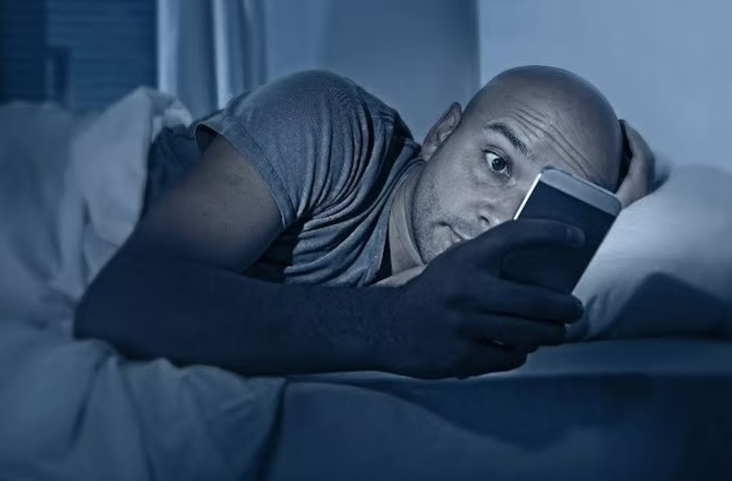
Nighttime scrolling can crowd out the signals that help the body prepare for sleep.
How to stop doomscrolling without cutting off the world
The goal is not to become uninformed. The goal is to build a healthier relationship with information. The best approach combines boundaries, friction, emotional awareness, and replacement habits.
Name the job the scroll is doing
Before changing the habit, identify what it is trying to solve.
Doomscrolling may be serving one of these jobs:
Seeking reassurance
Avoiding a difficult feeling
Trying to feel prepared
Looking for connection
Filling boredom
Delaying sleep
Chasing outrage because it feels energizing
A simple question helps: “What am I hoping the next post will give me?”
If the answer is certainty, comfort, or control, a feed may not be the best tool.
Create a news window
Open-ended checking feeds compulsion. A time window creates a container.
Try this:
Pick one or two times per day to check news.
Use reliable sources instead of endless feeds.
Set a timer for 10 to 20 minutes.
Avoid checking during the first 30 minutes after waking.
Avoid checking during the last hour before bed.
This works because it separates staying informed from constant monitoring. The brain learns that information has a place, but it does not get the whole day.
Add friction to the habit
Doomscrolling thrives on ease. Make the unwanted behavior slightly harder.
Useful friction includes:
Move high-trigger apps off the home screen.
Log out after each use.
Turn off nonessential notifications.
Use grayscale mode in the evening.
Charge the phone outside the bedroom.
Put a physical book, journal, or puzzle where the phone usually sits.
A few seconds of delay can be enough to wake up choice.
Replace the scroll with a body-based reset
An anxious brain often needs the body to lead. Instead of arguing with thoughts, send a safety signal through action.
Try one of these for two minutes:
Slow breathing with a longer exhale
Stretching the neck, jaw, and shoulders
Walking to another room
Holding a warm mug
Naming five things you can see
Writing one worry and one next step
The aim is not to erase concern. It is to lower the nervous system’s volume.
Use a stopping ritual
Feeds lack endings, so create one.
A stopping ritual can be short:
Save or close the article.
Say, “I am done checking for now.”
Put the phone down in a set place.
Do one non-screen action.
The spoken line may feel silly, but it gives the brain a clear boundary. Habits respond well to cues.
Make the bedroom boring again
For sleep, the bedroom should cue rest, not threat monitoring.
A realistic plan:
Set a phone curfew 30 to 60 minutes before sleep.
Use a basic alarm clock if the phone is too tempting.
Keep chargers outside arm’s reach.
Replace scrolling with a repeatable wind-down routine.
If worries appear, write them down and choose a time to revisit them tomorrow.
This is one of the most practical answers to how to stop doomscrolling at night. The phone cannot pull attention as easily when it is not beside the pillow.

A healthier information routine often starts by making the phone less automatic.
When doomscrolling signals a bigger problem
Doomscrolling is common, but it can become a sign that stress or anxiety needs more support.
Consider reaching out to a mental health professional if scrolling feels uncontrollable, causes regular sleep loss, fuels panic, worsens depression, or interferes with work, relationships, or daily life. Support can help address the anxiety underneath the habit, not just the screen behavior on top of it.
This article is for general information and is not a diagnosis or medical advice. A licensed clinician can offer guidance for specific mental health concerns.
A healthier way to stay informed
Doomscrolling makes sense when viewed through the brain’s threat system. People scroll because they want safety, clarity, connection, or control. The problem is that endless negative content often gives the opposite: more anxiety, lighter sleep, and a nervous system that forgets how to stand down.
The better path is not ignorance. It is intentional attention.
Choose when to check. Choose where information comes from. Notice what the body feels. Protect the hour before sleep. Add friction where the habit is too easy. Replace the feed with something that actually helps the nervous system recover.
The next time one headline turns into twenty, pause and ask: “Is this informing me, or is it activating me?” That question can be the first step back to calm.
Looking for ongoing psychiatric care? Carissimi Mental Health & Wellness offers integrative psychiatry by telehealth to adults across Nevada.
