Magnesium for Anxiety Does It Really Help Recent Research Dosages and Daily Tips

A racing mind can make simple decisions feel heavy. Sleep gets lighter. Muscles stay tense. The body feels stuck in “on” mode. That is one reason magnesium has become such a popular topic in anxiety care. It plays a role in nerve signaling, muscle relaxation, sleep, and stress response, all of which connect to how calm or keyed up a person feels.
Still, it is not a cure-all. The research is promising in some areas, mixed in others, and strongest when this mineral is used as part of a broader mental health plan. Here is what recent evidence suggests, how much people typically need, which foods contain the most, and how to use supplements safely.

How magnesium may affect anxiety
Magnesium helps regulate several systems involved in stress and mood. It supports normal nerve function, helps muscles relax, and contributes to healthy sleep rhythms. It also interacts with brain pathways involved in excitability and calm.
Researchers often focus on a few possible mechanisms:
Glutamate and GABA balance Glutamate is an excitatory neurotransmitter. GABA is more calming. Magnesium appears to help regulate NMDA receptors, which are involved in glutamate activity. In plain English, it may help keep the nervous system from becoming overly reactive.
Stress hormone regulation The body’s stress response runs through the hypothalamic-pituitary-adrenal axis, often called the HPA axis. Some research suggests low magnesium status may make this system more sensitive to stress.
Inflammation and oxidative stress Chronic stress and anxiety symptoms can overlap with inflammatory processes. Magnesium is involved in many enzyme reactions that help the body manage oxidative stress.
Sleep quality Poor sleep can worsen anxious thoughts and physical tension. Magnesium may support sleep in some people, especially when low intake is part of the picture.
This does not mean low intake causes every case of anxiety. It also does not mean a supplement will work like a prescription medication. Anxiety can come from many sources, including genetics, trauma, thyroid issues, substance use, chronic stress, medication side effects, and life circumstances. Magnesium is one possible support, not the whole answer.
What recent research says so far
The best short summary is this: studies suggest a possible benefit, but the evidence is not strong enough to call magnesium a stand-alone treatment for anxiety disorders.
A widely cited systematic review published in Nutrients in 2017 looked at magnesium supplementation for subjective anxiety and stress. The authors found that existing studies pointed toward a potential calming effect, especially in people vulnerable to anxiety, but they also noted major limits. Many studies were small, used different doses and forms, and measured symptoms in different ways.
Some randomized trials have found meaningful improvements in stress or anxiety-related scores, especially when participants had low magnesium intake or high stress. Trials that combine magnesium with vitamin B6 have also drawn attention. In some groups with severe stress, the combination appeared to perform better than magnesium alone, though results do not prove that everyone needs B6 with it.
Research on sleep and mood may also matter. Studies in older adults and people with sleep concerns suggest supplementation can improve certain sleep measures for some participants. Better sleep can indirectly lower anxiety symptoms, even if the supplement is not directly treating anxiety.
There is also interest in specific forms, including magnesium glycinate and magnesium threonate, because they are often marketed for calm, sleep, or brain health. Glycinate is popular because it tends to be gentle on the stomach. Threonate has been studied for brain magnesium levels, but claims about anxiety relief still need more high-quality human trials. In integrative psychiatry, clinicians may use nutrient status, sleep, therapy, medication when needed, and lifestyle care together rather than relying on one supplement.
The evidence is promising enough to discuss, but not strong enough to replace proven anxiety treatments.
For people with mild symptoms, low dietary intake, muscle tension, or poor sleep, improving mineral intake may be a practical step. For panic attacks, trauma symptoms, severe insomnia, or anxiety that interferes with work or relationships, professional care should come first.

Recommended dosages and how to choose a supplement
The Recommended Dietary Allowance, or RDA, covers total daily intake from food and drinks. For adults in the US, general targets are:
Group | Recommended daily intake |
Adult women | 310 to 320 mg per day |
Adult men | 400 to 420 mg per day |
Pregnancy | 350 to 360 mg per day, depending on age |
These numbers refer to total intake, not just pills.
For supplements, the tolerable upper intake level is 350 mg per day from supplemental magnesium for most adults. This limit does not apply to food sources, because the body handles food-based intake differently and excess from food rarely causes problems in healthy people.
Common supplement amounts range from 100 to 300 mg per day. Many people start low, such as 100 to 200 mg in the evening, then adjust based on tolerance and guidance from a clinician.
Common forms and what they are known for
Form | Common use | Notes |
Magnesium glycinate | Calm, sleep, general use | Often well tolerated and less likely to cause loose stools |
Magnesium citrate | Constipation, general supplementation | Can loosen stools, which may be helpful or annoying |
Magnesium oxide | Low-cost option | Contains a high amount per pill but may be less well absorbed |
Magnesium malate | Energy support, muscle symptoms | Often taken earlier in the day |
Magnesium threonate | Brain health interest | More expensive, anxiety evidence is still limited |
The label can be confusing. Look for the amount of elemental magnesium, not just the total compound weight. A bottle may say “magnesium glycinate 1,000 mg,” but the elemental amount may be much lower.
If anxiety is worse at night, taking it with dinner or one hour before bed may fit best. If it causes stomach upset, take it with food or lower the dose.
Best food sources rich in magnesium
Food is the safest foundation. It also brings fiber, protein, healthy fats, and other nutrients that support steady mood and energy.
Good sources include:
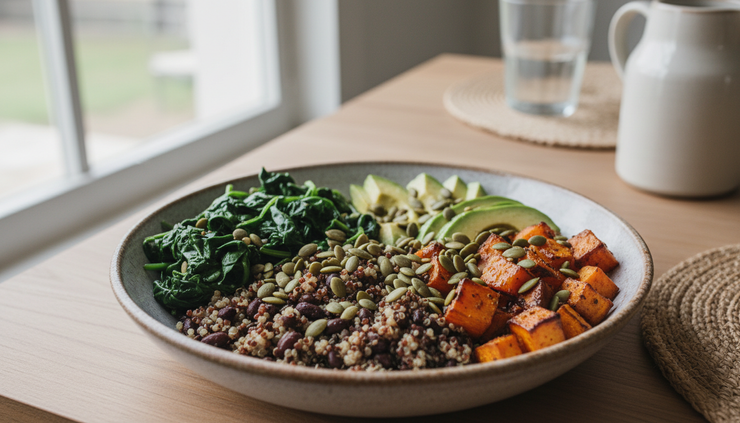
Pumpkin seeds
Chia seeds
Almonds and cashews
Spinach and Swiss chard
Black beans, kidney beans, and lentils
Edamame
Brown rice and quinoa
Oats
Peanut butter
Dark chocolate
Avocado
Yogurt and kefir, in smaller amounts
A simple day could look like this:
Oatmeal with chia seeds and peanut butter
A spinach and black bean bowl at lunch
Greek yogurt with pumpkin seeds for a snack
Salmon, quinoa, and roasted vegetables for dinner
A square of dark chocolate after dinner
No single food has to carry the whole load. Small additions work well because they are easier to keep. A tablespoon of pumpkin seeds on soup, a handful of almonds in a bag, or beans added to a salad can raise intake without changing the entire diet.
Potential side effects and who should be careful
Most healthy adults tolerate food-based magnesium well. Supplements need more care.
Common side effects include:
Loose stools or diarrhea
Nausea
Stomach cramping
Sleepiness, especially when taken with other calming substances
High doses can cause more serious problems, especially in people whose kidneys cannot clear excess minerals well. Symptoms of too much can include weakness, low blood pressure, confusion, irregular heartbeat, and in severe cases, medical emergency.
People with kidney disease should not take supplements unless a clinician recommends it. Extra caution also makes sense for those who are pregnant, managing heart rhythm problems, or taking multiple medications.
Magnesium can interfere with absorption of some medications, including certain antibiotics, thyroid medication, and osteoporosis drugs. In many cases, spacing doses by a few hours helps, but medication timing should be reviewed with a pharmacist or prescriber.
This article is for general information only and is not a substitute for medical diagnosis or treatment.
Practical daily tips for anxiety support
The best routine is boring in a good way. It should be simple enough to repeat.
Start with a one-week food check. Track how often meals include seeds, nuts, legumes, leafy greens, and whole grains. If those foods rarely show up, begin there before buying a supplement.
Use one small habit at a time:
Add pumpkin seeds to breakfast or salad.
Swap white rice for quinoa or brown rice a few times per week.
Keep almonds or cashews available for an afternoon snack.
Add beans or lentils to soups, bowls, and tacos.
Choose dark chocolate with a higher cocoa content when craving something sweet.
If trying a supplement, keep the experiment clean. Start with one product at a low dose. Do not add several new supplements at once, because it becomes hard to know what helped or caused side effects.
A practical trial might look like this:
Choose a well-tolerated form, often glycinate.
Take 100 to 200 mg with dinner for two weeks.
Track sleep, stomach comfort, muscle tension, and anxious symptoms.
Stop or lower the dose if diarrhea or grogginess develops.
Discuss ongoing use with a clinician, especially if taking medications.
Pair it with strategies that have stronger evidence for anxiety management, such as cognitive behavioral therapy, regular movement, breathing skills, sleep consistency, and limiting excessive caffeine. Supplements tend to work best when the basics are not ignored.
If anxiety feels hard to manage alone, professional support can help connect symptoms, lifestyle, medical history, and treatment options. To talk with a mental health professional, schedule a consultation with Carissimi Health.

The balanced takeaway
Magnesium may help some people feel calmer, sleep better, or reduce stress-related tension, especially when intake is low. Research supports a possible benefit, but the studies are not consistent enough to treat it as a guaranteed anxiety remedy.
Food sources are the best first step. Supplements can be useful, but dose matters. For most adults, staying at or below 350 mg per day from supplements is the safer range unless a clinician recommends more.
Think of it as one tool in a larger plan. When combined with good sleep, steady meals, movement, therapy, and appropriate medical care, it may support a calmer nervous system. On its own, it has limits. Used thoughtfully, it can be a simple and low-cost part of anxiety management.



Comments