
A medication class best known for diabetes and weight loss is now raising a bigger question: could GLP-1 receptor agonists also affect mood, cravings, anxiety, and overall mental well-being?
That question matters because GLP-1s, including medications such as semaglutide and liraglutide, do more than change blood sugar and appetite. They act on hormone pathways that connect the gut, brain, metabolism, inflammation, and reward. As millions of people use these medications, researchers are watching closely for both benefits and risks.
The early picture is promising, but not settled. Studies suggest possible links between GLP-1s and lower rates of depression symptoms, reduced cravings, less “food noise,” and better quality of life for some people. At the same time, regulators and clinicians continue to monitor psychiatric safety concerns, including reports of suicidal thoughts.
This article is for information only and is not medical advice. GLP-1 medications should be used only under the care of a qualified healthcare professional.

GLP-1 research is expanding beyond blood sugar and weight.
Why GLP-1s may affect the brain as well as the body
GLP-1 stands for glucagon-like peptide-1. It is a hormone involved in insulin release, fullness, digestion, and appetite regulation. GLP-1 receptor agonists mimic this hormone and help activate GLP-1 receptors.
Many people know these medications by brand names used for type 2 diabetes or chronic weight management. The scientific story is broader. GLP-1 receptors also appear in parts of the brain involved in appetite, reward, motivation, stress response, and impulse control.
That does not mean GLP-1s are antidepressants. It means they may influence biological systems that overlap with mental health.
Several pathways could help explain the possible GLP-1 mental health benefits now being studied:
Reduced appetite signaling
Some patients describe less constant thinking about food, often called reduced food noise. For people who have distress around eating, this can lower daily mental burden.
Changes in reward processing
GLP-1 activity may affect how the brain responds to highly rewarding stimuli, including certain foods, alcohol, nicotine, and other substances.
Improved metabolic health
Blood sugar swings, insulin resistance, obesity, and sleep disruption can all affect energy, mood, and cognition. Improving these factors may indirectly support mental well-being.
Lower inflammation
Chronic inflammation has been linked with depression in some research. GLP-1s may have anti-inflammatory effects, though the clinical meaning for mood is still under study.
Better physical functioning
Weight loss, improved mobility, and better cardiometabolic health can improve self-confidence and daily quality of life for some patients.
These possible mechanisms are connected, not separate. A person who sleeps better, has fewer cravings, feels more mobile, and worries less about blood sugar may also feel emotionally stronger.
What recent research suggests about mental well-being
Research on GLP-1s and mental health is moving quickly. The strongest evidence still supports their approved uses, such as type 2 diabetes and weight management. The mental health findings are newer and more mixed, but several themes are emerging.
Observational studies have found encouraging signals
Large real-world studies using electronic health records have reported associations between GLP-1 use and lower rates of certain psychiatric outcomes compared with some other medications. Some analyses have looked at depression diagnoses, anxiety-related outcomes, substance use patterns, and suicidal ideation.
One area that drew attention was research comparing semaglutide with other diabetes or weight-loss drugs. Some findings suggested that people taking semaglutide had a lower recorded risk of suicidal thoughts than people taking certain comparison medications. This was especially notable because regulators had been reviewing spontaneous reports of suicidal ideation in people using GLP-1s.
These studies are helpful because they include large numbers of patients in routine care. They can reveal patterns that smaller trials may miss.
They also have limits. Observational research cannot prove cause and effect. People prescribed GLP-1s may differ from people prescribed other medications in ways that are hard to fully measure. Diagnosis codes do not always capture lived experience. A lower risk in records does not mean a medication directly improves mood.
Still, these signals are important. They suggest that the relationship between GLP-1s and mental health may be more complex than “risk only” or “benefit only.”
Clinical trials often show quality-of-life improvements
In weight management trials, many participants report improvements in physical functioning, daily activity, and weight-related quality of life. Those changes can matter for mental health, even if they are not the same as treating depression or anxiety.
For example, someone who has less joint pain, better sleep, and more energy may feel more engaged in daily life. Someone with better blood sugar control may experience fewer crashes that can feel like anxiety or fatigue. Someone whose cravings feel less urgent may feel more in control.
This does not mean every person feels better emotionally. Some people experience nausea, fatigue, constipation, or frustration with slow progress. Others may struggle with body image changes, medication access, cost, or fear of weight regain after stopping treatment.
The key point is that mental well-being should be measured directly, not assumed from weight loss alone.
Researchers are studying addiction and compulsive behaviors
One of the most interesting areas is GLP-1 research on alcohol, nicotine, and other substance-related behaviors. Animal studies have suggested that GLP-1 activity may reduce reward-driven consumption. Early human research and real-world reports have sparked interest in whether these medications could reduce cravings.
Some patients taking GLP-1s for diabetes or weight management have reported drinking less alcohol or feeling less interested in it. Researchers are now exploring whether this reflects a true medication effect, an indirect effect of lifestyle changes, or both.
This area is still developing. No GLP-1 medication is currently approved by the FDA to treat alcohol use disorder, nicotine dependence, or other substance use disorders. Still, the research could open new options if controlled trials show clear benefit and acceptable safety.
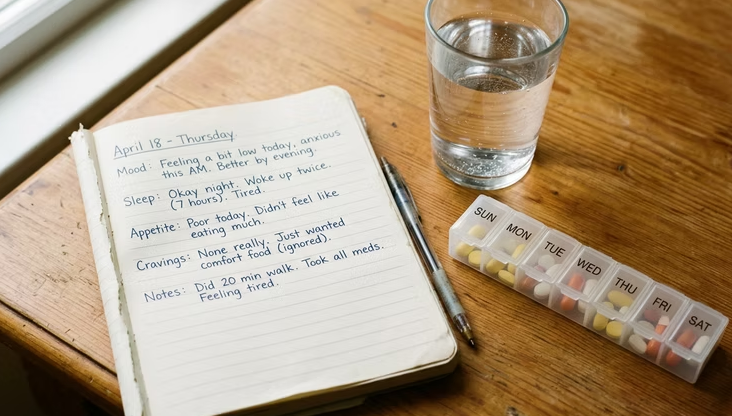
Tracking mood, appetite, sleep, and cravings can help patients and clinicians see patterns.
How GLP-1s could help some people feel mentally better
The potential benefits are not the same for everyone. They may depend on a person’s health history, symptoms, medication dose, side effects, support system, and reason for taking the drug.
Still, several mental health themes come up often in research conversations and clinical reports.
Less food noise may reduce daily distress
“Food noise” is not a formal diagnosis, but many people understand it right away. It refers to persistent, intrusive thoughts about food, hunger, cravings, or eating decisions.
For some patients, GLP-1s reduce that noise. Meals may feel less emotionally charged. Cravings may feel less urgent. The day may contain fewer mental negotiations about what, when, and how much to eat.
This can feel freeing. It may also help people follow nutrition plans with less shame and stress.
For patients with a history of eating disorders, though, the picture requires caution. Appetite suppression can sometimes interact with restrictive patterns, binge eating cycles, or body image distress. Clinicians should screen for eating disorder history and monitor changes in eating behavior, not just weight.
Mood may improve when metabolic health improves
Depression and anxiety often overlap with chronic conditions such as diabetes, obesity, sleep apnea, chronic pain, and cardiovascular disease. These conditions can affect mood through inflammation, sleep loss, hormonal changes, fatigue, and day-to-day stress.
When GLP-1s improve blood sugar, support weight loss, or reduce cardiometabolic risk, some people may feel better mentally. Better stamina and mobility can also increase social connection and physical activity, both of which support mood.
This is an indirect benefit, but indirect does not mean minor. For many patients, mental health is tied to whether daily life feels manageable.
Anxiety may shift in different directions
Some people report feeling calmer on GLP-1s, especially if they experience fewer cravings or better blood sugar stability. Interest in GLP-1 receptor agonists anxiety research is growing for that reason.
Others may feel more anxious, especially early in treatment. Nausea, dehydration, reduced food intake, or fear of side effects can all make the body feel unsettled. For someone prone to panic, those physical sensations may be misread as danger.
That is why symptom tracking matters. A patient who feels worse after a dose increase may need slower titration, better hydration, nutrition support, or a different treatment plan.
Safety concerns still deserve serious attention
The mental health conversation around GLP-1s should include both potential benefits and potential harms. Treating these medications as miracle mood drugs would be premature. Treating them as dangerous to mental health without good evidence would also be too simple.
The FDA has reviewed reports of suicidal thoughts or actions among people using GLP-1 receptor agonists. In early safety communications, the agency said its preliminary review had not found evidence that GLP-1s cause suicidal thoughts or actions, while also saying it could not rule out a small risk and would continue monitoring.
That kind of language matters. Spontaneous reports can raise important signals, but they cannot prove causation on their own. People using GLP-1s may also have medical conditions, pain, stigma, depression, medication changes, or life stressors that affect risk.
Patients and clinicians should still take mood changes seriously.
Contact a healthcare professional promptly if any of these appear after starting or increasing a GLP-1:
New or worsening depression
Panic symptoms or severe anxiety
Thoughts of self-harm
Major sleep disruption
Unusual agitation or impulsivity
Severe restriction of food intake
Persistent vomiting, dehydration, or inability to eat
Anyone in immediate danger or thinking about self-harm should call or text 988 in the U.S. to reach the Suicide and Crisis Lifeline, or call 911 for emergency help.

Mental well-being can change with appetite, nutrition, sleep, and medication timing.
What future FDA approvals could mean for care
Right now, GLP-1 medications are not FDA-approved to treat depression, anxiety, or any primary psychiatric condition. Prescribing them mainly for mood would be off-label and not supported as standard mental health care.
That could change in the future, but only if strong clinical trials show that a GLP-1 improves a specific condition and has a favorable safety profile.
Potential future directions may include:
Substance use disorders, such as alcohol use disorder
Binge eating or other eating-related conditions, with careful safety screening
Depression linked with metabolic dysfunction
Cognitive or inflammatory conditions where GLP-1 pathways may play a role
Broader cardiometabolic conditions that indirectly affect mental health
FDA approval for a mental health-related indication would mean more than a new label. It could affect insurance coverage, clinical guidelines, prescriber education, dosing recommendations, and monitoring standards.
It would also force a better answer to a key question: who is most likely to benefit?
A future approval would likely define the patient group carefully. For example, a medication might help people with a specific substance use disorder, or people with obesity and a related condition, but not serve as a general treatment for low mood.
Until then, FDA updates on GLP-1 safety should be read carefully. The absence of a confirmed psychiatric risk does not equal proof of psychiatric benefit. At the same time, early positive signals justify further research.
Why this matters for patients and healthcare providers
The GLP-1 mental health conversation is not only academic. It affects real decisions in exam rooms, pharmacies, therapy sessions, and homes.
For patients, understanding possible mental effects helps set realistic expectations. A GLP-1 may reduce appetite and cravings. It may improve quality of life. It may also cause side effects that affect mood, energy, or eating patterns. If emotional changes occur, they deserve attention rather than dismissal.
For healthcare providers, mental health should be part of GLP-1 care from the beginning. That means asking about depression, anxiety, disordered eating, substance use, sleep, and current psychiatric medications before treatment starts.
It also means checking in after dose changes. A simple question can reveal a lot:
“Since starting this medication, have you noticed any changes in mood, anxiety, cravings, sleep, or your relationship with food?”
That question opens the door to safer and more personalized care.
A thoughtful GLP-1 visit may include:
Baseline screening for depression and anxiety
Review of eating disorder history
Discussion of alcohol and substance use
Education about common side effects
A plan for nausea, hydration, and nutrition
Clear instructions on when to report mood changes
Coordination with mental health professionals when needed
This is especially important because the public conversation often moves faster than the science. Social media stories can be compelling, but they do not replace controlled trials or individualized medical advice.
What to watch next in GLP-1 mental health research
The next wave of research needs to answer practical questions.
Do GLP-1s directly improve mood, or do people feel better because weight, sleep, pain, and blood sugar improve? Are some medications in this class different from others? What happens after someone stops treatment? Do benefits apply to people without diabetes or obesity? How should clinicians monitor people with past depression, anxiety, trauma, or eating disorders?
Researchers also need more diverse study populations. Mental health outcomes can vary by age, sex, race, ethnicity, income, access to care, and medical history. If GLP-1s become part of new treatment models, the evidence should reflect the people most likely to use them.
The most useful studies will measure more than weight and A1C. They should include mood scales, anxiety scores, sleep quality, substance cravings, quality of life, and patient-reported experiences with food noise.

The next stage of GLP-1 care will likely combine medical outcomes with mental health tracking.
The takeaway for GLP-1s and mental health
GLP-1s are changing how clinicians treat diabetes, obesity, and cardiometabolic risk. They may also change how medicine thinks about the links between metabolism, cravings, mood, and the brain.
The early mental health findings are encouraging, especially around quality of life, reduced food noise, and possible effects on reward-driven behaviors. But the science is still young. No GLP-1 is currently approved as a treatment for depression, anxiety, or substance use disorder.
The best path forward in balanced care. Patients should feel comfortable reporting emotional changes, good or bad. Clinicians should ask about mental health before and during treatment. Researchers should keep testing these signals in well-designed studies.
GLP-1s may not become psychiatric medications in the usual sense. Their bigger contribution may be showing that mental and metabolic health are more connected than many treatment systems have allowed. Understanding that connection could lead to better care for the whole person.
Mental health and physical well-being are deeply connected. If you have questions about how modern medical advances fit into your personal wellness strategy, we’re here to help. Reach out to Carissimi Mental Health & Wellness today to schedule a comprehensive, personalized consultation and discuss a treatment plan tailored to your goals.
